

Although electric kettles are small household appliances, they are basically found in every household and are very common in life. I just bought a constant temperature electric kettle at the front time. Today we will start with this electric kettle and talk about the choice of electric kettle.
1. Process material
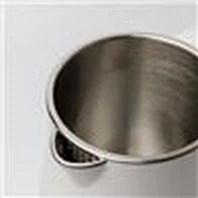
The inner material of the electric kettle is generally 304 stainless steel - the electric kettle is one of the products listed in detail in the national standard, so the requirements are relatively high. As long as it is a qualified electric kettle, the inner material must be food-grade 304 stainless steel.
For electric kettle enclosures, some have and some don't. No shell, the inner tank is shell, the inner layer is in contact with water, and the outer layer is in direct contact with air. The biggest disadvantage of this type of electric kettle is that it is hot. Slightly better electric kettles will have plastic casings. With an enclosure, the risk of scalding is greatly reduced.
Slightly better electric kettles will have plastic casings. With an enclosure, the risk of scalding is greatly reduced.
In terms of craftsmanship, we can look at the seams inside the pot - pots with seams are welded. Seams can be easily damaged, especially when boiling tap water with a lot of limescale. The seamless inner liner is one-piece pressure-bearing, without gaps, there are no weaknesses, and the service life is naturally longer.
2. Insulation and constant temperature
An electric kettle without a casing has no heat preservation function. After the water is boiled in the pot, it will naturally cool down. Kettles with shells generally have slightly better thermal insulation performance. However, the thermal insulation effect still depends on the material and thickness of the shell. Some high-end electric kettles will also be sandwiched between the inner tank and the outer shell, but in my opinion, it is not very useful.
There is only one word difference between constant temperature and heat preservation, but the principle is much different. Insulation relies on the shell to slow the rate at which the water temperature decreases. The constant temperature relies on internal electronic components to keep the water temperature in the electric kettle at a constant temperature.